Generators for well water homes
On a private well, losing power means losing water. A standby generator sized for your pump's starting surge brings the faucets back within seconds and keeps them running.
Hurricane Milton, Oct 10, 2024
70,394Marion County electric customers out, 31.3% at the Florida PSC 9 AM report
Or call (352) 780-1430. A licensed installer who serves your area calls back, usually within one business day.
In Hurricane Irma, a Marion County update showed Clay Electric about 92% out and Duke about 90%. Every home on a private well among them lost water too.
One flush left: the first hour of an outage on a well
- No power
- on a private well means no water once the pressure tank drains
- 92%
- of Clay Electric's Marion customers out in Hurricane Irma, 2017
- 2.16 gal/hr
- propane burned by a 22 kW air-cooled unit at half load
- Up to 8
- Generac load management modules per compatible transfer switch
The lights go out at dinner. For a minute nothing seems different, because the pressure tank still holds a little water. Then the kitchen faucet sputters, and you realize the dishes, the shower and the second flush will all have to wait. On city water, the utility runs the pumps. On a private well, the pump is yours, and it runs on your electricity.
Here is what stops when the pump does:
- Faucets, once the pressure tank empties
- Toilets, after one flush each
- Showers, laundry and the dishwasher
- Softeners or filters with their own pumps
- Water for dogs, chickens, goats or horses that drink from the same well
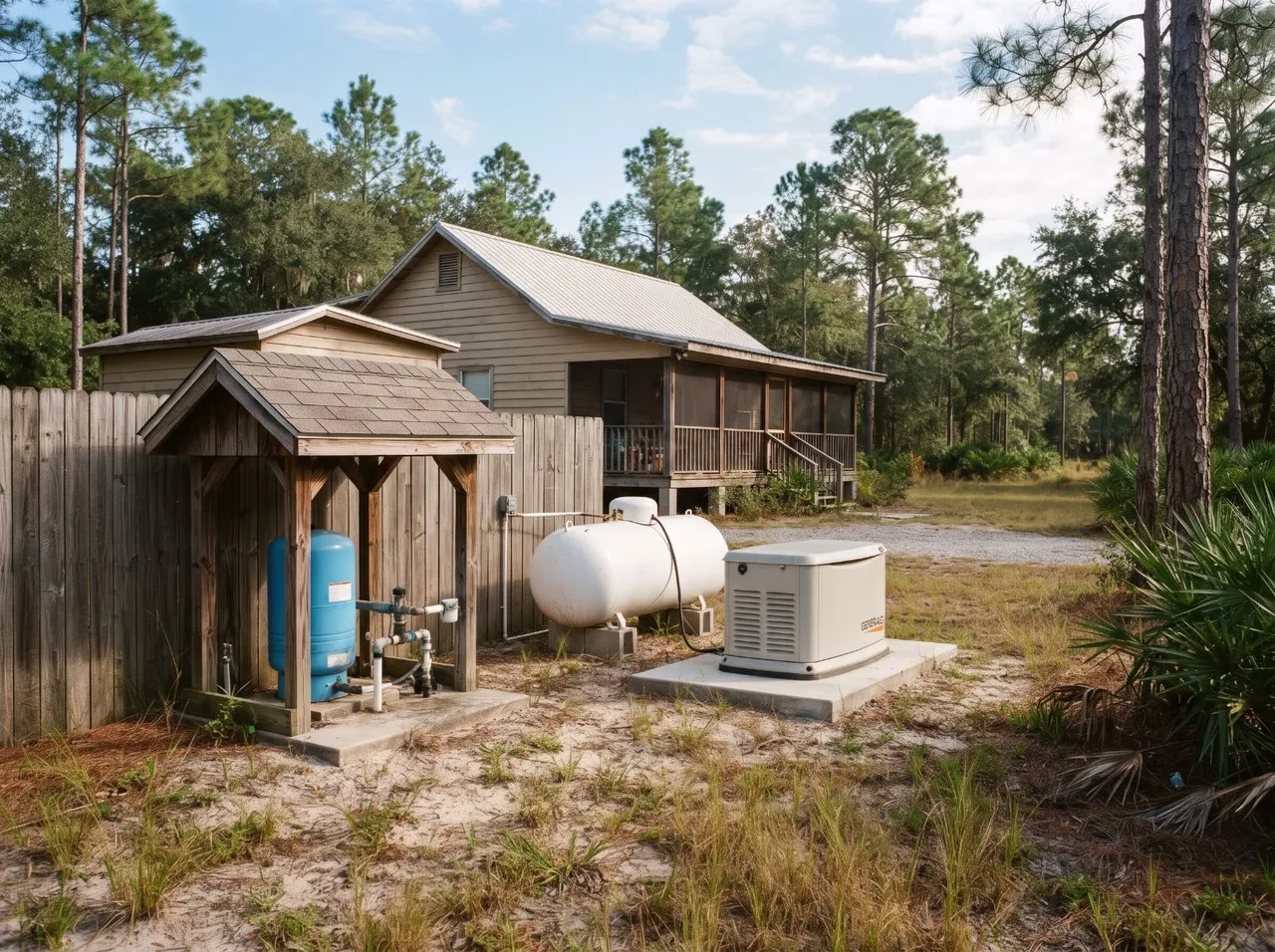
Private wells serve many homes outside city water lines, whether you are on a big lot near Dunnellon, in Rainbow Lakes Estates, on a farm road near Reddick or out toward the forest in Fort McCoy. In the heat after a storm, going days without water is often the hardest part of an outage. A standby generator restarts the pump within seconds of losing power, with no one outside pulling a cord.
Read the pump before you read the brochure
A well pump is a motor, and motors pull a burst of power when they start, well above what they draw while running. That starting surge is the number generator sizing has to respect. If the generator is already carrying the air conditioner and the fridge when the pump kicks on, it has to absorb that spike without stalling.
Four details change the size:
- Horsepower. Bigger pumps pull more, and deeper wells usually need bigger pumps.
- Voltage. It affects how the pump connects to the generator. Your installer confirms it.
- Submersible or jet. A submersible sits down in the well; a jet pump sits at the surface. Both start with a surge.
- What else runs at once, especially central air, the biggest load in most Florida homes.
Before the visit, take phone photos of the pump control box, the pressure switch and any label you can find, and dig out the paperwork from whoever drilled or last serviced the well. The sizing tool on this page opens with essentials and the well pump ticked. Add your AC and you have a starting range; the generator sizing guide explains the math behind it.
When the pump and the air conditioner start together
Free in-home estimate, written price, no obligation.
Get my estimateThe trouble moment is not the pump alone. It is the pump and the AC compressor trying to start in the same second. Load management prevents that collision. On a whole-house transfer switch, Generac's Smart Management Modules, up to eight per compatible switch, let big loads start one at a time and shed lower-priority loads if the generator nears its limit. That often lets a mid-size generator carry a well home instead of stepping up a size, which can lower the quote.
If you prefer to cover essentials only, a 16-circuit transfer switch can include the pump, the refrigerator, some lights and one air conditioner. The one rule: make sure the pump circuit is on the list and clearly labeled in the panel, so the right breaker gets moved. The transfer switch page compares both setups, and your installer can price them side by side on the same written estimate.
Out past the gas main: fuel and the wait for crews
Homes on wells are often beyond natural gas mains too, so propane is common. Tank size decides how long you run. A 22 kW air-cooled generator uses about 2.16 gallons of propane an hour at half load and about 3.67 at full load. Your propane supplier sizes the tank to the number of days you want covered, and you can buy or lease it. If gas does run along your road, it removes the refill question. The natural gas vs propane guide covers both.
Days matter because a big storm can leave rural roads waiting. In Hurricane Helene in 2024, Marion had about 41,778 customers out, including about 9,096 on Clay Electric, the cooperative that serves part of north and northeast Marion. SECO Energy and Duke Energy Florida each serve tens of thousands of Marion customers, and SECO had about 75,250 Sumter customers when Hurricane Milton knocked 13.9% of them out.
The same storm, with the pump on generator power
Run the dinner-hour outage again, this time with a standby generator on the pad. The lights blink. Outside, the generator starts on its own, and within seconds the transfer switch moves the house over. The pressure switch clicks, the pump refills the tank, and the faucet you were rinsing a plate under barely pauses.
The next morning there is coffee, a hot shower if the water heater is on the plan, and a full trough for the animals. You might fill a few jugs for the neighbor down the road whose house is still dark. When utility power returns, the switch moves the house back and the generator cools down and shuts off. You may only find out from the app or the controller that it ran at all.
That outcome depends on two choices made at the estimate: a generator sized for the pump's starting surge plus the rest of the load, and the pump circuit wired to the transfer switch. Get those right and the well stops being the weak point of every outage. If your water heater is electric, tick it in the sizing tool too, since it adds real load.
Septic pumps, softeners and the things people forget
- Label the pump breaker in your panel now, while the lights are on.
- Check the pressure tank. A healthy tank means the pump cycles less often, which is easier on the pump and on the generator.
- Septic with a pump or alarm? Many systems work by gravity, but if yours has an electric pump, mention it so that circuit is covered too.
- Livestock waterers on the same well belong in the plan. For larger operations, see horse farm generators.
- Irrigation pumps can usually stay off the generator. The lawn can wait out an outage.
Then the steps: a free in-home estimate, a written quote, permits through the county or city building department that covers your address, one to two days at the house, inspection and startup. Most projects take four to eight weeks from signed estimate to power on, and typical Florida installs run about $7,000 to $15,000; the cost guide explains the range. One request here reaches a vetted, licensed installer who serves rural addresses like yours, usually with a call back within one business day.
Three steps to power
Without backup, the next long outage means one flush per toilet, no showers, no dishes and a hunt for bottled water in the heat after a storm.
Free estimate
The installer reads your pump's horsepower and voltage, checks the pressure tank and panel, and sizes for the pump's start plus the house.
Install day
One to two days at the house. The pump circuit goes on the transfer switch, labeled, with load management if the AC and pump share.
Power on
At startup, watch the pressure gauge climb on generator power and learn how the unit tests itself each week.
Straight answers
Free in-home estimate, written price, no obligation.
Get my estimateDoes a power outage really cut off my water on a well?
Yes. A private well runs on an electric pump. When the power goes out, the pump stops, and once the pressure tank empties there is no running water, no flushing and no showers. A standby generator restarts the pump within seconds of the outage and keeps it running until utility power returns, with nobody needing to go outside.
How do I figure out the generator size my well pump needs?
Start with the pump's horsepower and voltage, usually shown on the control box or in your well records, then add what else runs at the same time, especially central air. Pumps pull a large surge when they start, and the generator has to handle it. The sizing tool gives a range; an installer confirms it at the free estimate.
Should the well pump be on a 16-circuit essentials switch?
If you choose an essentials switch, the well pump should be one of the chosen circuits, along with the refrigerator, some lights and at least one air conditioner. Label the pump breaker clearly so the installer moves the right circuit. A whole-house switch with load management is the other option and avoids choosing circuits ahead of time.
How long will a propane tank keep my well running?
It depends on tank size and how hard the generator works. A 22 kW air-cooled unit burns about 2.16 gallons an hour at half load and about 3.67 at full load, and the well pump is only part of that. Your propane supplier can size a tank to the number of days you want covered. Top it off before each season.
Does my septic system need generator power too?
Only if it uses electricity. Many septic systems work by gravity alone, but some have an electric pump or an alarm. If yours does, tell your installer at the estimate so that circuit goes on the generator. A pumped system without power can back up, so it belongs in the same plan as the well.