Generator sizing guide
Florida sizing starts with the air conditioner and, on acreage, the well pump. Use the sizing tool for a starting number, then let an installer confirm it from your nameplates.
Hurricane Milton, Oct 10, 2024
70,394Marion County electric customers out, 31.3% at the Florida PSC 9 AM report
Or call (352) 780-1430. A licensed installer who serves your area calls back, usually within one business day.
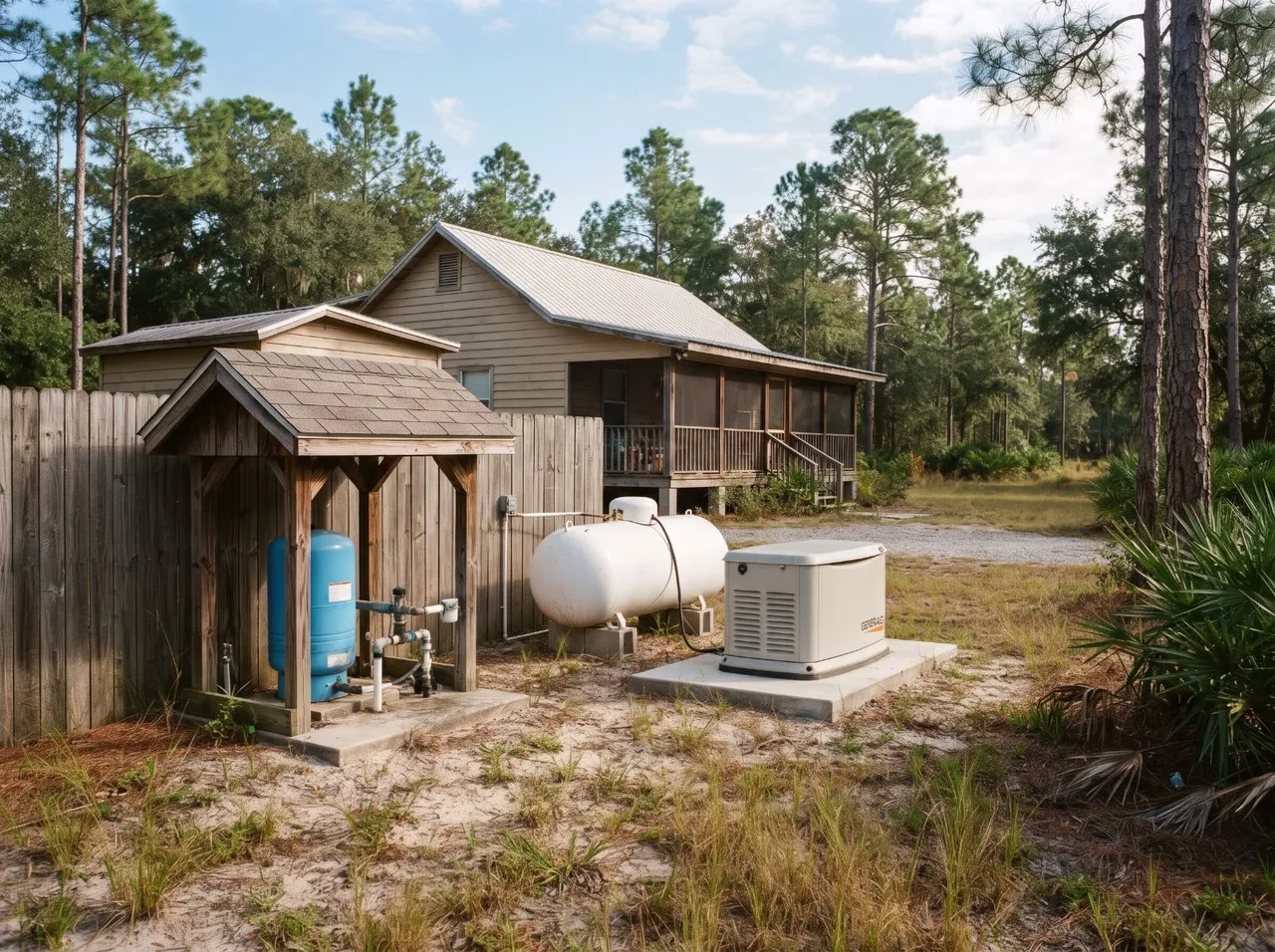
Sizing for a July afternoon in Marion County
Free in-home estimate, written price, no obligation.
Get my estimatePicture the hardest hour your generator will ever work. In Marion or Sumter County that is not a cold night. It is a July afternoon after a storm has taken the power out: the air conditioner is running flat out, the refrigerator is fighting the heat, and on acreage the well pump is kicking on every time someone opens a tap or a trough refills. Outages here do not wait for hurricanes, either. On July 11, 2026, thunderstorms left about 3,000 to 3,500 Marion customers without power at the peak.
Generac's own maintenance guidance tells you how hard that heat is on an engine: it cuts the oil-change interval from 200 hours to 100 when the unit runs above 85°F. Heat matters for people, too. Sumter County's median age is 68.5, the oldest of any US county, and 29.7% of Marion residents are 65 or older. For many households, keeping the house cool is the whole point.
So this guide sizes for that afternoon. The sizing tool on this page asks the questions that matter, gives you a starting range in a couple of minutes, and sends your answers along with your free estimate request, so the licensed installer who serves your area walks in already knowing your house.
Kilowatts without the jargon
Generators are rated in kilowatts (kW). One kilowatt is 1,000 watts, so a 22 kW generator can supply about 22,000 watts at once.
Everything electrical in the house uses watts. A light bulb uses a few. A refrigerator uses more. A central air conditioner uses a lot. Add up everything that is on at the same moment and you have the load. Sizing means keeping that total, including the brief spikes, under what the generator can deliver.
Home standby generators come in steps rather than any size you like:
- Generac's standard air-cooled home units run from 10 to 28 kW, with liquid-cooled lines up to 80 kW.
- Kohler's most popular home sizes are 14, 20 and 26 kW.
- Briggs & Stratton makes 13, 18, 22 and 26 kW PowerProtect units.
- Cummins builds 13, 17 and 20 kW home units, and Champion a 14 kW.
Your job is to land on the right step. If your list falls between two steps, the starting surge decides which side you land on, and load management can sometimes keep you on the smaller one. The brands comparison lines the steps up side by side.
Cooling type follows size. Most single-family homes land in the air-cooled range. Large estates and farms with several big motors are where liquid-cooled units, such as Generac's Protector lines from 22 to 80 kW, come in.
The two-second surge that sets the size
This is the part most people miss, and it matters more in Florida than almost anywhere.
Running watts are what an appliance uses while it is on and humming along. Starting watts are the short burst it pulls the moment it switches on. For lights and electronics the two are about the same. For anything with a motor or a compressor, starting watts are much higher, for a second or two.
The big motors in a typical local home:
- Central air conditioner or heat pump compressor
- Well pump
- Refrigerator and freezer compressors
- Pool pump
- Barn fans and a second well on a horse property
A generator that easily carries your running load can still stall or trip if the AC compressor starts while everything else is already on. So the generator has to cover the running load plus the largest surge that could land on top of it. Before the estimate, walk the house and the yard and list every motor you can find. It takes ten minutes and makes the visit sharper.
Appliances with heating elements, such as an electric water heater, range or dryer, do not surge the way motors do, but they draw a lot while they run. Whether yours are electric or gas changes the total more than most people expect.
On July 11, 2026, summer thunderstorms, not a hurricane, left about 3,000 to 3,500 Marion County customers without power at the peak.
Your condenser's nameplate tells the story
Air conditioners are sized in tons, a measure of cooling capacity. More tons means a bigger compressor, more running watts and a bigger starting surge. A house with two systems, one for the main living area and one for a bonus room or wing, has two compressors that could start at the same moment.
The installer does not guess at this. At the estimate, they read the nameplate on your outdoor condenser. It lists the compressor's running amps and its locked rotor amps (LRA), the figure that describes the starting surge. That number, more than square footage, decides how much generator you need. Snap a photo of the label before the visit if you can reach it safely.
Two things can bring the size down:
- A soft starter on the compressor reduces its starting surge. Some installers recommend one, especially on older or larger units. Ask whether it makes sense for yours.
- Load management keeps two air conditioners from starting at the same moment and can hold a second unit off until there is room. Generac's Smart Management Modules, up to eight per compatible transfer switch, do this automatically; other brands have their own load control.
With load management, a whole-house switch and a mid-size generator can often carry the entire house in daily outage use. The alternative is a 16-circuit essentials switch with a smaller unit, where anything not on the list stays dark.
On a well, the pump is not optional
If your home runs on a private well, as many rural Marion and Sumter County properties do, a power outage is also a water outage. The pump stops, and so do the faucets, the toilets and the water for animals. Marion County alone is home to about 75,000 horses, the most of any US county, and a horse drinks every day whether the power is on or not. If you are on a well, the pump goes on the generator. Full stop.
Well pumps are motors, so they have a starting surge too, and deeper wells and larger pumps pull more. The installer checks the pump's horsepower and voltage, usually from the pressure switch, the control box or your well records. If you have the paperwork from when the pump was put in, set it out for the visit.
A large pump can push you up a size, or load management can make sure the pump never starts at the same moment as the AC. Farms with barns on the same service, irrigation or a second well are where liquid-cooled units sometimes enter the picture. The well water page and the horse farm page go deeper on both.
Using the tool, then confirming the number
Have these answers handy when you open the sizing tool:
- How many central air systems you have, and their tonnage if you know it (often printed on the outdoor unit)
- Whether you are on a well or city water
- Electric or gas for your water heater, range and dryer
- A pool or spa pump, an EV charger, or a barn on the same service
- Medical equipment, a home office, or a second refrigerator or freezer
- Whether you want everything to run, or just the essentials
The tool gives you a range, not a final answer, and it passes your answers into the estimate form so you do not repeat yourself. One request matches you with a vetted, licensed installer who serves your address, usually with a call back within one business day. At the free in-home visit, they confirm the size from your panel, your service and the motor nameplates, and they settle the fuel plan, which the natural gas vs propane guide explains.
Size has a real effect on price. A larger generator costs more, burns more fuel and may need larger fuel piping. Typical Florida installs run about $7,000 to $15,000, and the cost guide shows how size moves the total. Bigger is not automatically better: a generator far too big for the load runs lightly most of the time and costs more for no gain. The goal is the right step for your house, with load management doing the balancing.
If your plans change before the quote is final, such as a new pool or a second air conditioner, tell the installer. A size picked for last year's house is an easy way to end up short.
Straight answers
Free in-home estimate, written price, no obligation.
Get my estimateCan I size a generator by my home's square footage?
Not reliably. Two houses of the same size can need very different generators depending on how many air conditioners they have, whether they are on a well, and whether the water heater, range and dryer are electric or gas. Square footage is a hint at best. The sizing tool asks about the loads that actually drive the number.
Why does my air conditioner matter so much?
The AC compressor is usually the biggest load in a Florida home, and it pulls a large surge for a second or two each time it starts. The generator has to absorb that surge on top of everything else running. The installer reads the compressor's locked rotor amps from the outdoor unit's nameplate to size for it.
What happens if the generator is too small?
When the load, or a starting surge on top of it, exceeds what the generator can deliver, it can stall or trip its breaker, and the house goes dark again until it resets. Load management prevents most of this by shedding lower-priority loads and staggering motor starts. Sizing correctly from the nameplates prevents the rest.
Do I need a bigger generator because I'm on a well?
Sometimes. A well pump is a motor with its own starting surge, and deeper wells with larger pumps pull more. A modest pump may fit within the size you already need for the AC, especially with load management staggering the two. The installer checks the pump's horsepower and voltage before recommending a size.
Does the sizing tool's answer go to the installer?
Yes. Your answers about air conditioners, wells, appliances and priorities carry into the estimate request, so you do not have to repeat them. The installer uses them as a starting point, then confirms the size at the free in-home visit by checking your electrical service and the nameplates on your motors.
Is it worth paying for more generator than I need?
Usually not. A generator much larger than your load costs more to buy and install, burns more fuel, and runs lightly most of the time. If you expect to add a pool, an EV charger or a second AC soon, say so, and size for that house. Otherwise, the right step plus load management is the better buy.