Generators for retirees
Whether you are home in On Top of the World or up north until October, a standby generator keeps the air on, the medicine cold and the house watched.
Hurricane Milton, Oct 10, 2024
70,394Marion County electric customers out, 31.3% at the Florida PSC 9 AM report
Or call (352) 780-1430. A licensed installer who serves your area calls back, usually within one business day.
In Hurricane Milton, SECO Energy had 13.9% of its Sumter customers out on Oct. 10, 2024, and Marion County's outages peaked near 75,000.
The house you leave behind in June
- 68.5
- median age in Sumter County in 2020, the oldest of any US county
- 80.8%
- of On Top of the World residents were 65 or older in 2020
- 29.7%
- of Marion County residents are 65 or older
- Sept. 10
- rough peak of hurricane season, which runs June 1 to Nov. 30
Picture the week after Labor Day. You are at the lake cottage in Michigan or at your daughter's place in Ohio, and the news shows a storm crossing Florida. Your villa in On Top of the World or your patio home in The Villages is shut up tight, thermostat set, freezer stocked for your return. Then the lines come down, and nobody is there to hear the air handler go quiet.
That timing is not bad luck. Hurricane season runs June 1 to November 30 and peaks around September 10, according to the National Hurricane Center, which overlaps the months many seasonal owners spend elsewhere. A closed Florida house without air conditioning holds heat and moisture, and the freezer you filled in May starts thawing on day one.
A whole-home standby generator does not care whether you are home. It senses the outage, starts on its own and takes over within seconds, then runs the air conditioning, the refrigerator and the lights on natural gas or propane until the utility comes back. Generac Guardian units ship with free Mobile Link Wi-Fi monitoring, so from the cottage porch you can see on your phone that the generator started, that it ran its weekly self-test and whether it needs service. Ask your installer to set up the app with you at startup and to confirm the unit reaches your home Wi-Fi from where it sits.
Heat is the risk that sneaks up on you
Wind gets the headlines, but heat is what most people here feel during a long outage. Once the air stops, a house in Marion or Sumter County in September turns uncomfortable within hours, and the humidity makes it worse. Fans need power too, and a hotel room is hard to find when the whole region is dark. Your doctor can tell you how heat affects your own health; many people find it harder to handle at 75 than they did at 45.
Your central air is usually the single largest load in the house, so it decides the size of your generator more than anything else. If your home has a second system, it counts too. The generator sizing guide walks through it in plain language, and the sizing tool on this page opens with your essentials and medical equipment already ticked. Add your AC tonnage and you will have a starting range before anyone visits.
That is the order of things here: the honest homework first, with a size range from the tool, the typical price from the cost guide and the HOA facts below. Then a licensed installer confirms the size with a proper load calculation at your kitchen table.
ARC applications, Florida law and where the unit can sit
Free in-home estimate, written price, no obligation.
Get my estimateNearly every 55+ community here has an architectural review step, and a generator is an exterior change. Here is what is actually on the record.
- Florida law. Florida Statute 720.3035(6) lets an HOA board or architectural committee set specifications for fixed generators and fuel tanks, but it cannot deny an application that meets them. It may still require you to follow the community's existing building scheme.
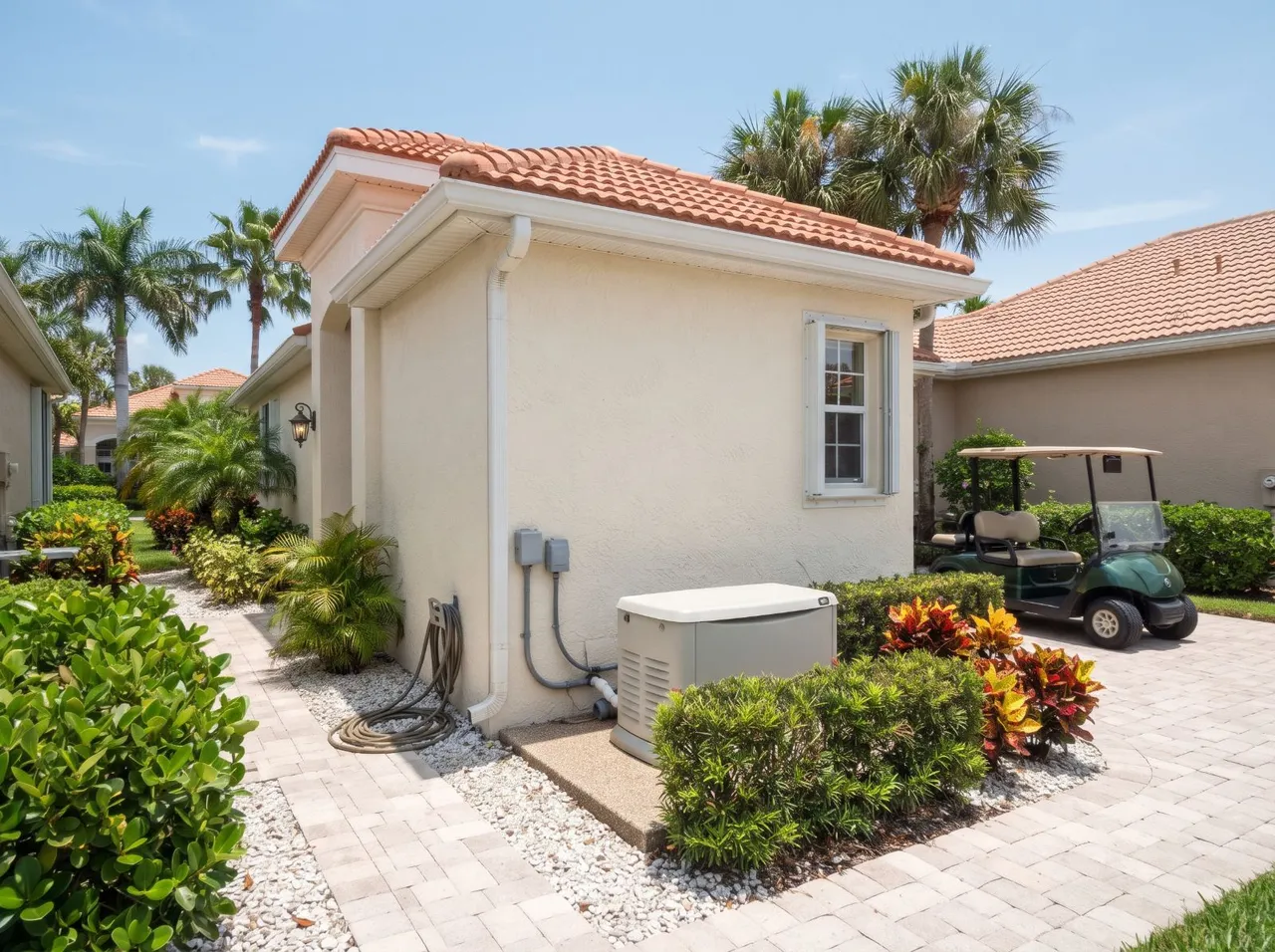
- The Villages. The District ARC manuals require approval for exterior changes before work begins, and the owner is responsible for county or city permits. The Districts 13 to 15 manual says permanently fixed generators go at the rear or side of the home site and must not be visible from the street.
- On Top of the World, Stone Creek, Oak Run and the rest. No generator rules are published that we could find, so plan on an architectural review application before the permit. Installers who work in your community prepare it with you.
The order matters. The Villages has ordered owners to correct unapproved exterior work within 45 days or face fines, so the sequence is ARC approval, then permits, then installation. Your installer pulls the electrical and gas permits through the building department that covers your address and books the inspections. You sign the forms; you do not stand in line at a permit counter, and you do not have to learn the ARC calendar.
The CPAP on the nightstand and the insulin in the door
For many households here, the generator protects things that matter more than groceries: a CPAP machine, an oxygen concentrator, a lift chair, a refrigerator door full of insulin pens or eye drops. A standby generator keeps them powered without anyone wrestling a portable unit into the yard at night, refueling it in the rain or running cords under the door.
Two questions belong with your doctor or pharmacist, not your installer: how long your medicines can safely sit out of the fridge, and whether your device needs a small battery to bridge the few seconds before the generator takes over. The medical equipment backup page covers that switchover gap and the registries worth joining before the season.
There is a safety reason to skip the portable generator, too. Portables make carbon monoxide, and the CDC says to run them outdoors, more than 20 feet from windows, doors and vents. A standby unit sits on a pad at the manufacturer's clearances, is installed under permit and starts by itself.
What it costs and how little you have to do
Typical Florida installs run about $7,000 to $15,000 for the generator, transfer switch, fuel connection, permits and startup. Where your home lands depends on the size, the distance to the gas meter or propane tank and the kind of switch you choose. Most projects take four to eight weeks from signed estimate to power on, with one to two days of work at the house.
That timeline is why the calendar matters. Sign in January or February and the ARC application, the permits and install day can all be behind you before you pack the car in May. Wait until a storm is on the news and you will be in line with everyone else who waited.
Your part is one request on this site. It reaches a vetted, licensed installer who already works in your community, so you are not calling around. Expect a call back, usually within one business day, to set a time. After that, the visit, the written quote, the ARC packet, the permits and the inspections are on the installer's list, not yours.
Three steps to power
Without backup, a long September outage means a hot, humid house and a spoiled fridge, whether you are in the living room or a thousand miles away.
Free estimate
A licensed installer who works in your community checks the panel, the fuel and the side or rear spot your ARC will accept, then puts it in writing.
Install day
With ARC approval and permits in place, one to two days of work at the house, followed by the building department's inspection.
Power on
Startup plus an app walkthrough on your own phone, so you can watch the generator from wherever you spend the summer.
Straight answers
Free in-home estimate, written price, no obligation.
Get my estimateCan I check on my generator while I am up north?
Yes, with most current home standby units. Generac Guardian models ship with free Mobile Link Wi-Fi monitoring, which shows on your phone whether the generator started during an outage, ran its weekly self-test or needs service. The unit needs a steady connection to your home Wi-Fi, so tell the installer where your router sits and ask them to set up the app with you at startup.
Will my 55+ HOA let me put in a standby generator?
Florida Statute 720.3035(6) lets an HOA set specifications for fixed generators but not deny an application that meets them. In The Villages, ARC approval comes before any work, and the Districts 13 to 15 manual requires rear or side placement out of view from the street. In other communities, plan on an architectural review application, which installers who work there prepare with you.
Does a standby generator make sense if I only live here part of the year?
For many seasonal owners it does, because hurricane season peaks in September, when the house is often empty. The generator keeps the air conditioning holding back heat and humidity and keeps the freezer cold, and phone monitoring tells you it ran. Whether it fits your budget is your call, and the free estimate comes with no obligation to buy.
Who handles the permits and the HOA paperwork?
Your installer. They prepare the architectural review application with you, pull the electrical and gas permits through the building department that covers your address and schedule the inspections. You will sign some forms, but you should not need to visit a permit office or chase approvals yourself.
When should I start if I want it running by June 1?
Winter is the sweet spot. Most projects take four to eight weeks from signed estimate to power on, and ARC review adds its own step in many communities. Booking the estimate in January or February usually puts install day in the spring, with weeks to spare before the season opens and before many owners leave for the summer.